

The Midlands Net Zero Hub appointed Klere (in partnership with Shropshire Council) to run a programme of feasibility studies across multiple local authorities to test if Area Based Insetting (ABI) could enhance traditional offsetting by keeping benefits local within a Local Authority area.
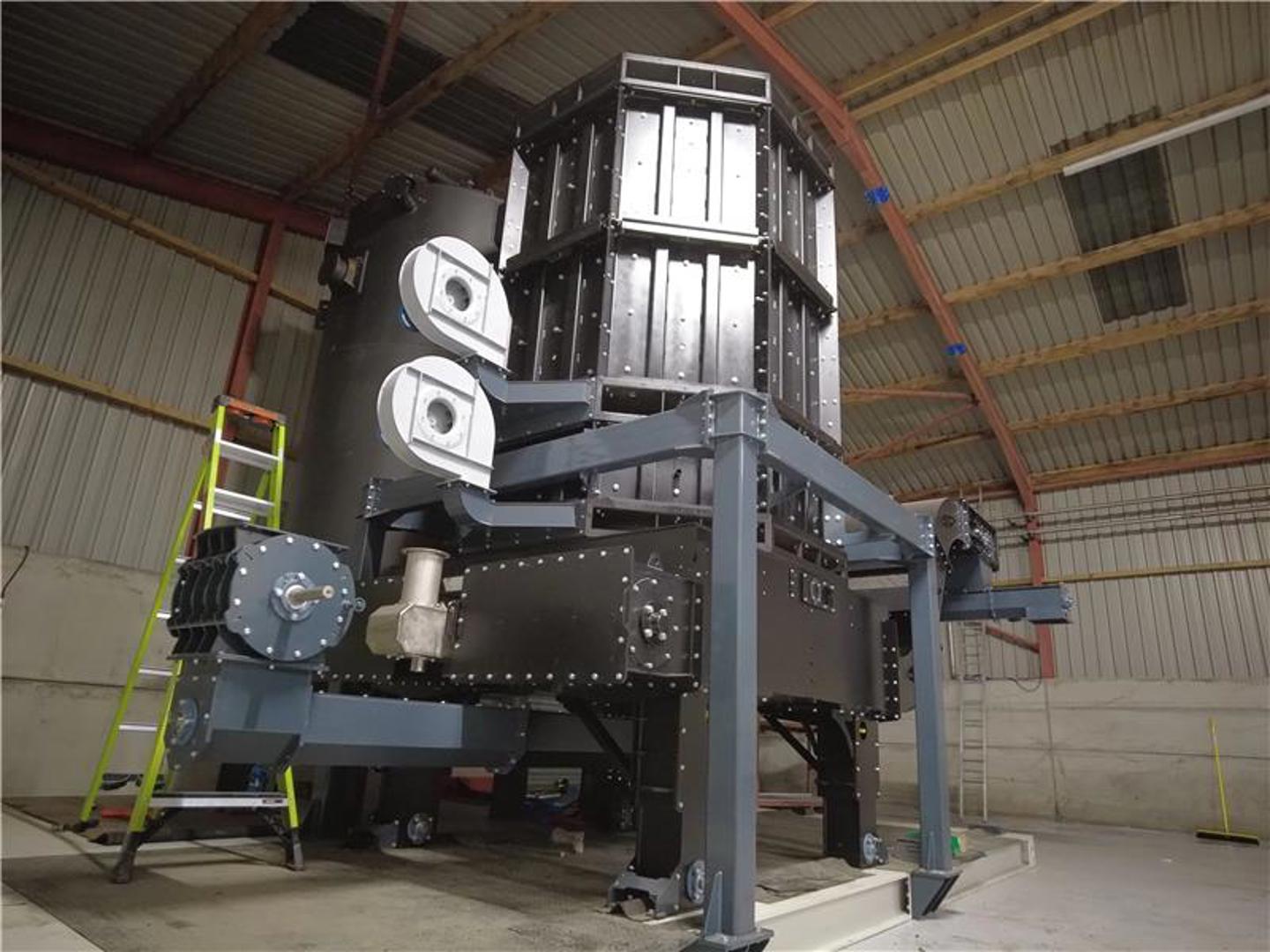
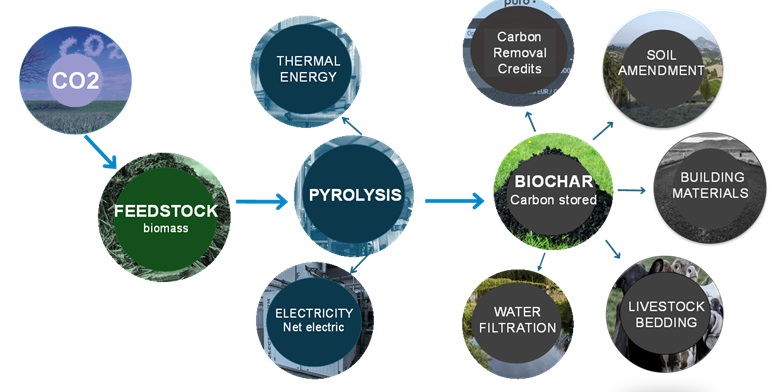
Pyrolysis for biochar transforms biomass into a valuable product, removes CO2 from the atmosphere by locking carbon into a stable solid form for long-term use while simultaneously generating energy and creating new revenue streams. The excess heat from production can also generate renewable energy. The project investigated how the process of pyrolysis could be used to convert local biomass into biochar to support both a positive financial return and insetting targets.
The project focused on Lincolnshire, Leicestershire, Walsall and Birmingham, but the findings have much wider relevance. The Project outcomes demonstrate that strong business cases can be made at a range of scales.
The Study in Leicestershire identified an opportunity to establish a small, single unit pyrolysis plant on a farm. The site could re-purpose an unused council property to produce biochar, generate carbon-negative baseload electricity, and trade high-quality carbon removal certificates (CORCs).
In Birmingham, an opportunity was identified to re-purpose an existing wood handling site with room to house a large plant plus storage and processing space. Infrastructure could be constructed directly to a proposed heat network ~1.3km from the site, or to surrounding consumers e.g., industrial, hotel, council owned residential areas.
The Lincolnshire study identified an opportunity to establish a “Carbon Negative Power Station”. This could be achieved by re-purposing a mothballed 12 MWe biomass power station to produce biochar, generate baseload electricity, and trade high-quality carbon removal certificates (CORCs).
The reports can be downloaded here:
For more information, please email the Hub team at MidlandsNetZeroHub@nottinghamcity.gov.uk